Skip to content
Food Writing

Grandmothers' Recipes and Their Stories

Family recipes carry more than ingredients and instructions. Explore how memory, place, and kitchen practice keep South Indian food traditions alive.

By The Slow Chai
· 4 min read
Photo illustrating: Grandmothers' Recipes and Their Stories

A grandmother’s recipe is rarely just a list of ingredients. It carries the habits of a kitchen, the timing of a season, and the voice of the person who taught it. For anyone interested in South Indian food, preserving that context can be as important as recording measurements.

This article explores how to document family recipes with care, understand why they change from one kitchen to another, and cook them in a way that respects both tradition and lived experience.

Key takeaways

  • Family recipes preserve technique, memory, and context—not just ingredients.
  • Differences between households can reflect living tradition rather than mistakes.
  • Sensory cues and cooking observations are essential when documenting a recipe.
  • Recording a dish’s place in family life makes it easier to understand and remember.
  • Recipes can evolve while still retaining their connection to the people who passed them on.

A recipe is a record of a person

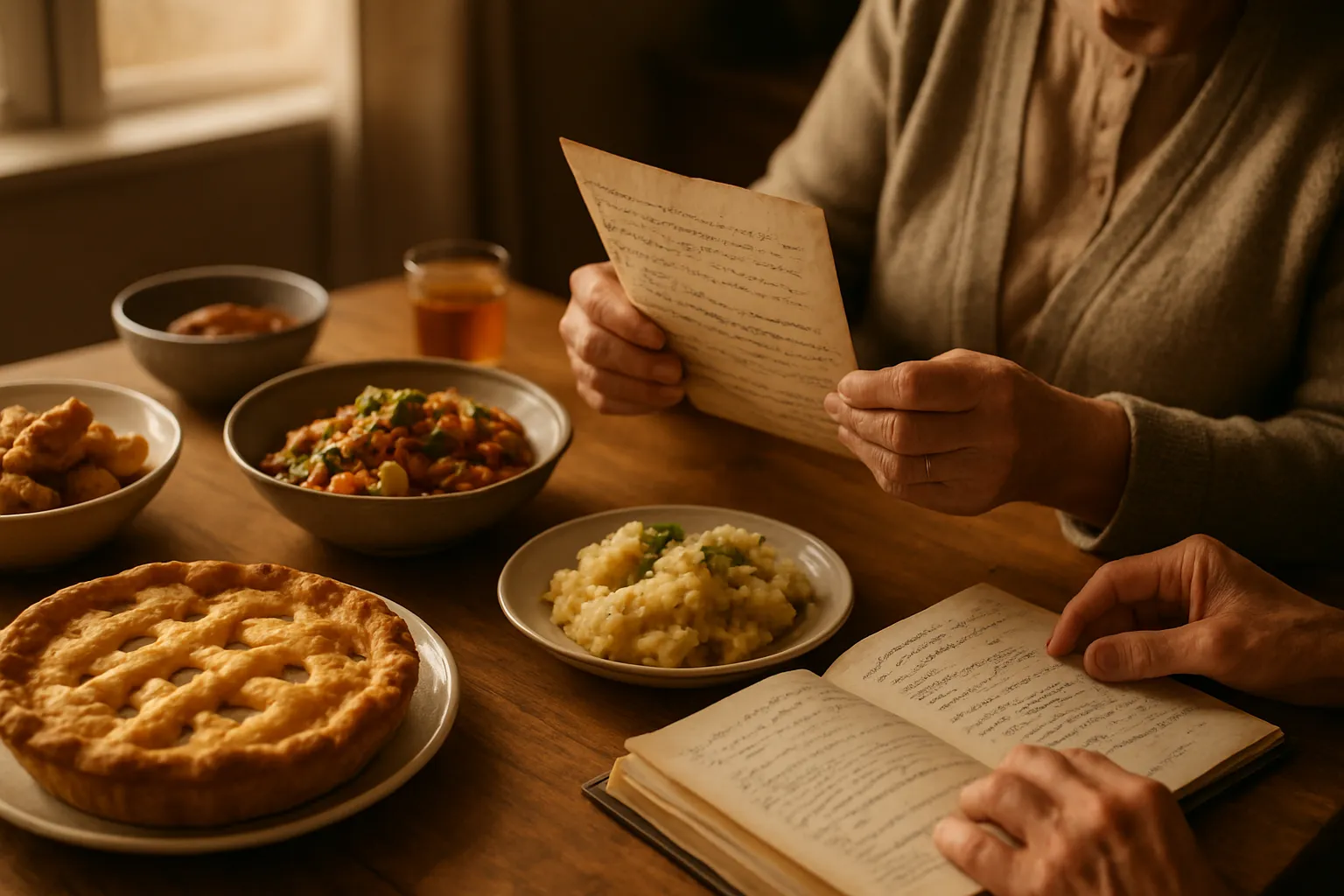
When a family recipe is passed down, it often arrives through demonstration rather than writing. Someone watches how finely the coconut is grated, how long the tempering is heated, or how the cook judges consistency without a measuring cup. Those gestures hold knowledge that a bare ingredient list cannot fully capture.

Writing down the dish means paying attention to more than quantities. Note who taught it, when it was usually made, and what the cook looks and smells for at each stage. These details make the recipe more useful while keeping the person behind it visible.

Why the same dish changes across kitchens

South Indian home cooking is not one fixed system. A dish may vary with region, season, available ingredients, family preference, or the cook’s own memory. One household may use more coconut, another may prefer a sharper sourness, and a third may finish the dish with a different tempering.

These variations are not necessarily errors. They show how recipes remain alive. Instead of searching for a single definitive version, ask what makes this version belong to this kitchen and this family.

How to document a family recipe

A thoughtful record can include measurements, but it should also preserve the method in the cook’s own terms. Phrases such as “until the raw smell leaves” or “add water little by little” may need explanation, yet they often contain the most important practical knowledge.

  • Record the recipe while cooking, rather than relying on memory afterward.
  • Ask the cook to describe visual and sensory cues, such as colour, aroma, texture, and the sound of a tempering.
  • Write down substitutions and seasonal choices separately from the core method.
  • Include the dish’s context: a festival, an ordinary weekday, a journey, or a particular family gathering.
  • Test the written version once, then return to the cook with questions about anything that felt unclear.

Cooking with memory and context

Food becomes more meaningful when you understand where it sits in a household’s life. A dish may be associated with a festival, a rainy afternoon, a long bus journey, or a time when ingredients had to be stretched. That background changes how the recipe is read and remembered.

Context also helps a cook make sensible choices. Knowing whether a dish was meant as a quick weekday meal or a special-occasion preparation can clarify its pace, richness, and accompaniments without turning it into a rigid rulebook.

Let the recipe keep evolving

Preserving a family recipe does not require freezing it in place. Younger cooks may adapt the method to a different kitchen, equipment, or dietary need while keeping its essential character. The important thing is to record what changed and why.

A living recipe can therefore hold several versions: the grandmother’s remembered method, the written version made today, and notes from future cooks. Together, they tell a fuller story than a single polished formula ever could.

Frequently asked questions

How do I record a recipe that has no exact measurements?

Cook alongside the person who knows it and note approximate quantities together with visual, sensory, and timing cues. Test the written version and refine it afterward.

Should a family recipe be changed to match a standard version?

Not necessarily. First preserve the household version and its context. If you adapt it later, label the adaptation so both versions remain clear.

What details are most useful beyond the ingredient list?

Record the order of steps, texture and aroma cues, cookware, substitutions, serving context, and the story of who taught the dish.

Why do recipes differ between regions and families?

Ingredients, climate, seasonality, local habits, household preferences, and oral teaching all shape how a dish is prepared.

Read More Food Stories

Subscribe to The Slow Chai for essays, recipes, and the memories that give South Indian food its meaning.

The Slow Chai
A weekly newsletter from Bengaluru on South Indian food, small towns, and slow travel, with essays, recipes, and member audio.
Our services →
Share this article WhatsApp LinkedIn
← All posts